OnTrack Reading - Home Page

February 13th, 2008

The OnTrack Reading website’s content, A Guide to Overcoming Your Child’s Reading Problems, is all listed on the Table of Contents on the adjacent sidebar.

Note: If you were helped by the information here at OnTrack Reading and would like to donate a few dollars toward the costs of hosting the site you can access Paypal with the button below. Please don’t feel obliged to do so, however. The information posted here at OnTrack Reading is free to all who visit.

Contact OnTrack Reading - E-mail Rod at everson.rodney@gmail.com with any questions, comments or suggestions you have after visiting the website.

Below are the main topics on the sidebar along with brief descriptions of their content:

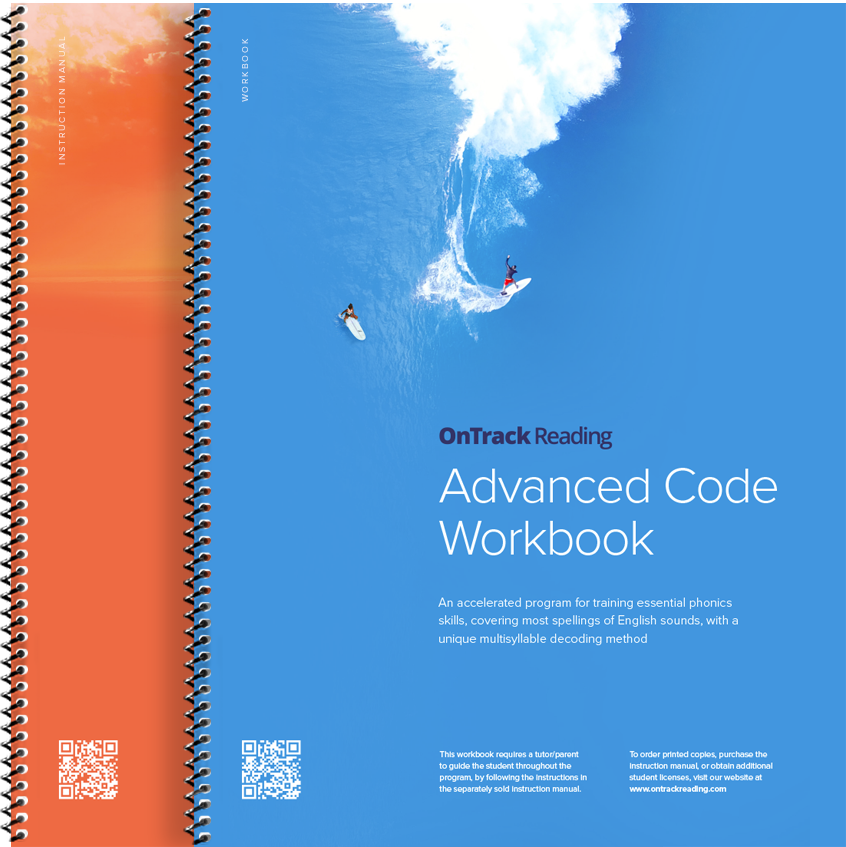
OnTrack Advanced Code Workbook - Information on the workbook used in the OnTrack Reading Phonics Curriculum, including how to order the workbook and the instructions

The OnTrack Reading Story - How it all started

The Dyslexia Puzzle - Gaining an understanding of dyslexia and its impact

The Diet Piece (of the Puzzle) - The possible impact of essential fatty acids on dyslexia

The Exercise Piece - Does the cerebellum matter, and will certain exercises help?

The Vision Piece - The most important information in the Guide, by far - Be sure to read this section if you’re concerned your child has dyslexia.

The Auditory Piece - Primarily training the skill of phoneme manipulation

The Phonics Piece - Portions of the OnTrack Reading Phonics Curriculum, including the entire multisyllable curriculum

The Policy Piece - Why getting help for your dyslexic child from your school is frustrating, and how it might change

Tidbits - Instructional tips starting with Telling b from d

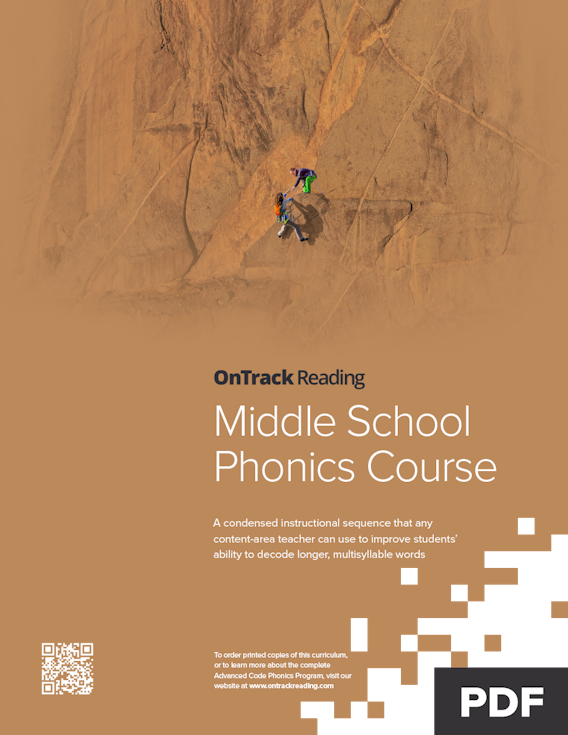
Junior High Phonics Course - A series of mini-lessons for teaching phonics in any middle school or high school classroom

The Spalding Method - Making an excellent reading method even better

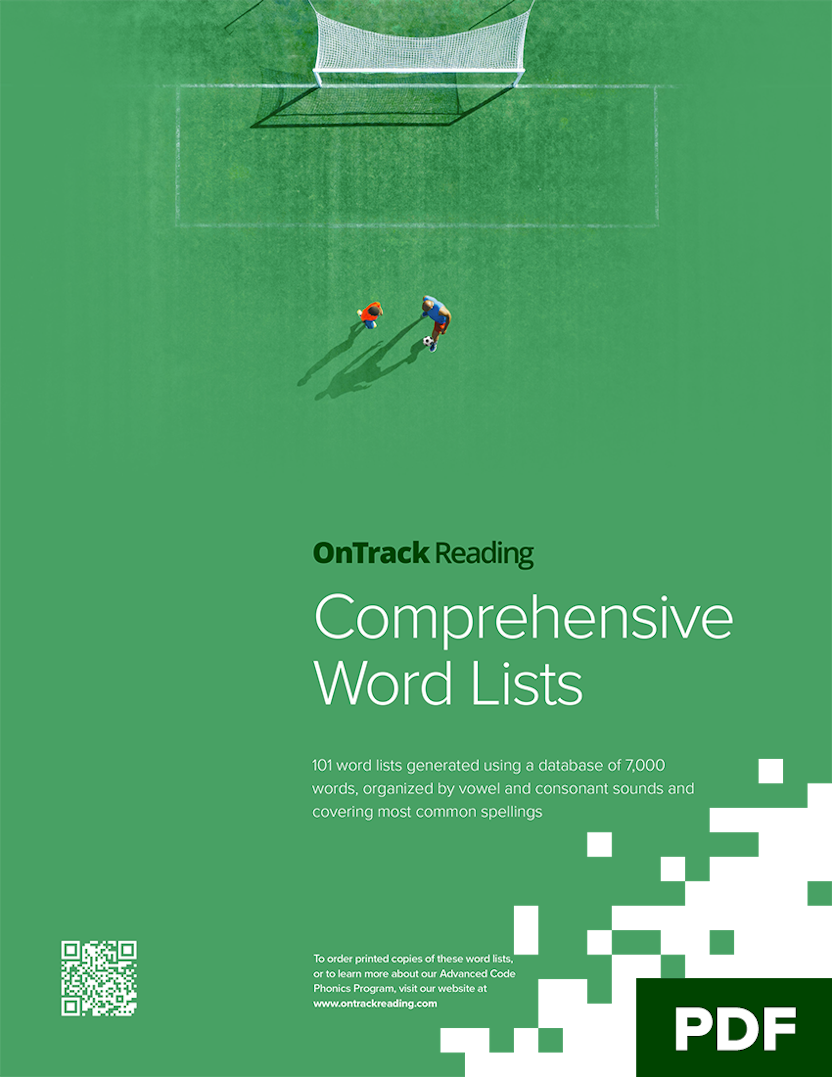
Comprehensive Word Lists
- Just what it sounds like

New: A section unrelated to reading instruction titled Economics was recently added, along with the first economics topic, Monetary Policy, an issue that has interested me for over thirty years.

Previous Blog Entries

February 13th, 2008

I’ve stopped adding regular commentary to the blog portion of the OnTrack Reading website, but the old entries can still be accessed by paging back through them from this page or by accessing the Archives on the sidebar.

There will soon be a temporary Home Page while the site is being redesigned to better fit the way the site is now being used. That appears to be as a resource for teachers and parents interested in various aspects of reading including word lists, phonics instruction, vision issues and dyslexia.

I’ll also be adding my email address to the temporary Home Page and welcome any comments, suggestions and questions visitors to this site might have to offer.

Website Problem–Fixed Now

December 19th, 2007

I apologize to anyone who has tried to access the information on my site the past couple of weeks. Somehow all of the pages to the Guide on the sidebar became inaccessible and it took a while to fix the problem.

While the site was down, Google (and probably the other search engines as well) categorized a bunch of pages that were randomly located on the site, so if you got here via a search engine and couldn’t make sense of the site, it’s because you became trapped in an archive of the site when it wasn’t working right. Try coming directly to ontrackreading.com and using the table of contents to the guide on the sidebar if you’ll be returning for additional information (instead of trying to find the page via the search engine…for a while, anyway.) With the site back up, the search engines should straighten out over time.

And thanks to the anonymous poster who left the comment that alerted me to the problem, and thanks also to my son, Matt, at Astuteo.com, for doing the fix. Thought I’d lost everything there for a while.

Merry Christmas, and Happy Holidays!

Rod Everson

OnTrack Reading

Fish Oil, Omega-3’s and Dyslexia

November 28th, 2007

Today, I’ve added a new section to the guide on the sidebar. It’s called The Diet Piece (of the Dyslexia Puzzle) and includes a page titled Fish Oil and Dyslexia which discusses a very interesting study that might have a bearing on the dyslexia puzzle.

It’s been a while since my last post, but that’s because the guide on the sidebar now holds most of what I’ve learned over the past several years about the situation we call dyslexia and how to address it most effectively. This addition on diet, particularly Omega-3’s might be important, but it certainly isn’t the answer in and of itself.

I continue to feel that dyslexia is a condition of delayed development across several fronts and that if a single answer is out there waiting to be found it will be something that addresses development at an earlier stage than we now attempt to do. Ultimately, because I think dyslexia has genetic roots, that single answer might even involve genetic tinkering of some sort or other.

For those of you who’ve read most of what I’ve written in the guide and are still looking for answers, I would recommend that you do some research on the role of the cerebellum, or midbrain, beginning with work done at the Dore Centers. This is the next area I intend to investigate, but it will take some time.

In the meantime, take a look at The Diet Piece (of the Dyslexia Puzzle)

Requesting Additional Word Lists

October 23rd, 2007

I’ve done a little revising of some of the pages of this Guide to Overcoming Your Child’s Reading Problems to accommodate the readers who find this site while searching for a source of word lists.

I have but one request of those of you who use the word lists you find here. Please read the page of the Guide titled My Take on Dyslexia before you leave. I sincerely believe that the information you find there will, if you are able to follow up on it, enable you to help most struggling readers in a way that most of you never realized even existed.

In fact, disseminating the information on that page (see the Table of Contents on the sidebar to get a feel for the Guide’s organization) is the reason this site was constructed.

Now, as to word lists, if you have searched the lists on this site under the section Comprehensive Word Lists (down at the end of the Table of Contents) and not found the list you need, just leave a comment here and I will find it and try to generate the list and post it on the site.

I have a 7,000 word database of words selected from a children’s dictionary which has each word broken down in the database by sound and symbol, as well as number of sounds and number of syllables, and can fairly easily generate a new list from it.

For example, if you want a list of the words in the database that end in the suffix “ture” it’s easy to generate. If it turns out that the list you request is too short to bother posting permanently, or too limited in potential interest to others, I’ll just provide it in the comment section on this page, but I should be able to get it to you one way or the other.

Here’s a link back to Comprehensive Word Lists.

The Phenomenon of Alternating Suppression

October 21st, 2007

I’ve done a little revising of the section titled The Vision Piece today to draw more attention to a visual condition called Alternating Suppression. If you have a child who is struggling with reading, it’s possible that he’s experiencing this on a daily basis, so you should read about it to better understand what is going on as he reads.

As you read it, if you or your spouse avoided reading during the early years but now enjoy reading, you might find yourself wondering whether your brain successfully managed to adapt your visual skills, or if it was forced to take a less optimal route so that you could better enjoy close-up experiences like reading.

A note of comments: I have responded to everyone who’s ever left a comment in here (including removing the ubiquitous Spam) but frankly, comments have been sparse and I’m tempted to remove the opportunity to leave them. I had hoped that some discussion would develop in here, but I’ve come to realize that even though this site sees steady traffic, it’s not organized in a manner that makes it easy to follow any discussion that might develop.

So, if the comment box disappears at some point, that’s what happened. When I get to the point of redesigning the site with a more logical home page, I’ll try to set it up so that comments all appear in one location to see if that generates more discussion.

Anyway, here’s the revised Page on Alternating Suppression.

Auditory Processing Exercises

October 20th, 2007

Today I’ve revised the section of the Guide I call The Auditory Piece (of the dyslexia puzzle.) You’ll find information on using manipulatives, or letter tiles, to help train the skill of phoneme manipulation on the Page Auditory Processing with Tiles, and the information on training phoneme manipulation strictly by oral means has been moved to the Page Oral Auditory Processing.

I have used the exercises described on those two Guide Pages with all clients who fail to score 100% on the Auditory Processing Test described in the phonics section of the Guide. All clients who have completed the curriculum have managed to score 100% on the test by graduation, usually by the 5th or 6th session or so. Phoneme manipulation is a necessary skill for reading English and it can be trained effectively.

On another note, the reasons my new posts in here have tailed off are two-fold: First, while the Guide on the Sidebar will never be complete as long as we have new information to uncover on reading problems and how to help struggling readers, I have managed to put the bulk of what I consider useful onto the site by now.

However, I had a decision to make as to whether or not to make available my Advanced Code Workbook for purchase by parents for use with your children or to just keep uploading files to the site. About 25% of the workbook is already on the site, but I realize it would be both a chore and very confusing to try to put together a curriculum from a bunch of downloaded files.

So the other reason for my infrequent posting lately is that I’ve been re-writing the Advanced Code Workbook that I use with each of my young clients with the intent of making it available through Lulu.com, an on-line, on-demand publisher. I’ve about completed it, but I need to also re-write the instruction manual that accompanies it, which I’m in the middle of doing now.

My intent is to have Lulu.com sell the workbook, so parents and instructors can order from their website (at a quite reasonable price, I think) and then to make the instructions available in two forms, either in print from Lulu.com or as a PDF file that can be downloaded either from this site free or from Lulu.com at a small fee.

For those of you reading this who’ve seen my existing workbook, the main change will be paper color. The blue paper won’t be available. However, I did order a coil-bound recipe book of the same approximate size as my workbook, and I was very satisfied with the product. About the only change you should notice will be the paper color, and with the instructions available in here as a PDF, the price will actually be significantly less than it would be if I was mailing them out myself. Shipping will even be available at the media mail rate, which can be slow, but the book I ordered that way arrived within five days.

The title will tentatively be OnTrack Reading Advanced Code Workbook and will have a color cover designed by my son, Matt, the graphic designer in the family.

So that’s what’s been going on. Plus I became a Grandpa for the first time two weeks ago. For now, take a look at the changes to The Auditory Piece.

Finishing the Consonant Word Lists

October 4th, 2007

Today I added the spellings of the /v/ sound and the /ng/ sound to the Page Consonant Sounds by Spelling. That completes the consonant word lists that I intend to post.

If anyone wants a particular list run off, feel free to post a request and I’ll see what I can do with it. Comments are a little hard for you to follow around in here due to the present format, but I can easily find any comment no matter what page you leave it on, so don’t worry, I will get you request.

Examples of the sort of searches that are possible would be: 1) List all words in the database ending with “ture”, 2) List all words ending with “ic”, 3) List all words with the digraph “oo” or 4)List all 2-syllable words with /ee/ sounds spelled “i”.

Actually most of the above requests could probably be found in the existing word lists if you go to the Page Comprehensive Word Lists, but if you can’t find what you want, leave a request and I’ll try to run it. Just remember, the database only has 7,000 words taken from a children’s dictionary, so there will always be words not on the lists.

Is Segmenting Really a Skill?

October 2nd, 2007

I don’t have a new Page to add to the Guide on the sidebar today, nor do I have any additions to the word lists I’ve been generating. It does appear, though, that the word lists have generated a fair amount of search engine traffic. I just hope that some of the teachers and parents who find this site via a word list search also take the time to read some of the information regarding vision problems, because if the vision problems were all fixed we probably wouldn’t need the word lists anymore, but that’s a subject for another day.

My purpose in posting today concerns segmenting. Is it a skill, or is it simply knowledge, or factual content, that must be learned?

I think it’s both. I’ve worked with children in my reading practice who do have difficulty segmenting a word like trip. They might think it starts with a /d/ sound (drip) or even a /ch/ sound (chrip) due to their unfamiliarity with the spelling of the words. This unfamiliarity is often accompanied by various speech issues as well, so that they are actually having difficulty pronouncing these words distinctively. At this level, we are seeking to develop a skill, an ability to perform an act.

However, once a child becomes capable of segmenting, it’s still an open question as to whether they can segment the sounds in words efficiently, or at all, for that matter. This gets more to the knowledge issue.

An older child might perform exceptionally poorly on the battery of four Phonics Assessment Tests in the Guide on the sidebar and often that is due to the child having little or no knowledge of the sounds in words. If this is the case, it is usually a trivial matter to improve segmenting ability simply by making it clear what those sounds are.

I recently worked with an older child who simply could not segment. “Dog” was /d/…/og/ and “hat” was /hhaaat/ When I asked how many sounds there were in “hat” the child responded “one.” Now, clearly this was a case of a failure of instruction. To let a child get to middle school and not understand that words are made up of sounds, and yet expect that child to understand how to read, is silly at best, and academic incompetence at worst.

Regardless, after one and one-half lessons I retested the child’s segmenting ability and got a perfect score with one exception. That exception was the word “point” and after asking what the sounds were in “boy” and getting /b/../oy/ in return, I then repeated “point” and got the proper four-sound reply, /p/../oy/../n/../t/. Once a child has progressed to the point where they can segment, it is often a nearly-trivial matter to actually show them how to segment. Don’t assume it will just happen without proper instruction, however.

If you have an older child who struggles with spelling, or with reading generally, at least make sure that the child knows what the sounds are in the words. Too many don’t, in my experience, and the weaker the school’s reading curriculum is, the more this will occur. If you do decide to administer the four Phonics Assessment Tests make sure to start with the Blending Test so that your child will have had the example of you saying individual sounds before you then turn the process around and ask for the specific sounds in words.

Consonant Sound /m/

September 30th, 2007

The Comprehensive Word Lists section on the sidebar now has the word lists for various spellings of the /m/ sound added to the Page Consonant Sounds by Spelling.

Posting here has been infrequent lately because I’ve been trying to prepare the Advanced Code Workbook that I have used with my clients for the past several years to be published by an on-demand printer. This would enable people to go directly to the printer’s website and order a copy of the workbook. I’m intending to post the instructions here in the form of a PDF, and probably also in the form of a series of Pages in the Guide on the sidebar (for those who are reluctant to download PDF files.) I might also send a copy of the instructions to the printer so a hard copy could be ordered along with the workbook itself, but first I have to be satisfied that the workbook product itself will be satisfactory.

But more on all that later. Here again is the location of the /m/ word lists: Consonant Sounds by Spelling.